
The (recent) history of the Terling Business Hub
(Full Terling history below ⬇️)

2017-2025
A great place to raise a family - and do business?
Allan Wills started out as an entrepreneur in 2017, the same year Terling won Essex Village of the Year, but that was just a pure coincidence.
By 2018, Allan moved to Terling with his young family.
The picturesque backdrop of Terling was very conducive to raising kids, and in that time, it seemed, starting several businesses that grew (more on that here).
The Wills family also leaned into many volunteer opportunities (at the school, church and pool, for example), then Allan and his son became the local "paper boy" from 2023 to 2025 (that was commercial!), and along the way we met other people in the area who ran small to medium size businesses.
Random conversations at the tea room, at the pub, by the pool and on dog walks (and even via Facebook Marketplace and the Terling Village Hub) formed the kernel of an idea: People in Terling helped each other out in many ways, nevertheless there didn't seem to be a place to talk about local business or new startup ideas.
2025
Let's try something new
Over the summer of 2025, a few Terling-ite business owners decided that forming an informal group that met once in awhile to help each other out would be a great idea. Kind of like Fight Club, but without the violence and this club encouraged members to talk about it.
Allan used one of his photos (a rainbow near the iconic Terling windmill) and also took the Terling crest and put a connective frame around it to symbolise our ambition to connect locals in commerce, and that became our logo.
A website was created and posted on the Terling Village Hub Facebook group in August to signal that this new idea was going to be tried and people could register their interest on the website. However...
Is this a scam? To Be Honest...
One concerned member of the community asked openly in the comments if our group was a membership that required payment, to which the answer was no.
As it turned out, some months previous, someone else in the village had formed a group for dads in business that turned into something of a pyramid scheme. No association to us.
We were the Terling Business Hub, TBH for short, which oddly enough turned out to also be the acronym for To Be Honest. Another coincidence?


25 Becomes 12 Becomes Four
In total, 25 people registered for the Terling Business Hub and we arranged a kick off meeting at the Terling Village Hall in September.
An even dozen turned out in person, and we discussed, brainstormed and white boarded a range of ideas and what people wanted out of the group.
We looked at everything from setting up a local co-working space to a private tool (think a tiny local LinkedIn) to investment - and within the room people offered to connect offline around things they could help each other out with so networking ensued.
There was also another idea proposed by Allan, about the local shop where he and his son were paperboys...
An idea: a local shop run by locals?
The local shop and Post Office was up for sale.
A belief formed that there was a strong business case to be made if key members of the village came together as a cooperative to acquire the business and run it by locals, for locals, as a community asset. (You can read more about that here.)
In the end, the shopkeeper went a different direction, and Allan had a change in his personal circumstances (another coincidence, more on that here), so from the outside, the TBH went dormant. However, there were embers burning among four of the original 25 people who expressed interest...

2026 to Present
Better together?
Out of the public eye, several local entrepreneurs running a range of businesses continued to meet ad hoc and continue the conversation.
Collaboration resulted (they are now "featured members"), and together they produced a film about the TBH such that by the summer of 2026 the TBH re-launched with some case studies to see who else in the community wanted to participate and benefit.
The deeper story
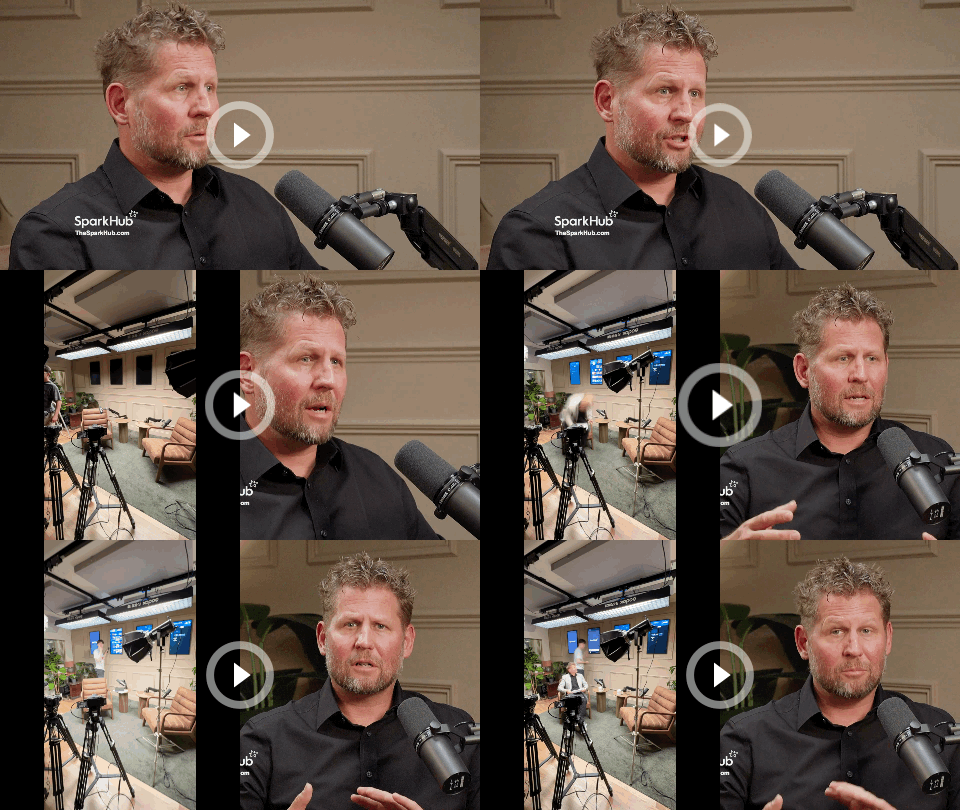
In Episode #47 from the SparkHub Podcast, Allan explores how the community of Terling helped him through some dark times, and how all of that lead to the creation of this iniative.
Terling history
Written by Zena Byrne,
aged 13
Key milestones:
627 – First reference to people living in the Terling area
1086 - Tarlinga mentioned in the Doomsday book
1200 – Bishop of Norwich builds a palace in the area, founding the village.
1315 – Great famine and growth of agriculture in the area
Late 1300’s – Post office on Crow Pond Lane built
1720 – John Strutt buys farmland around Terling
1772 – Terling Place built
1875 – Terling and Fairstead Horticultural Show begins
1885 – The Rayleigh Arms pub built
1904 – 3rd Baron Rayleigh wins Nobel Prize for physics
1965 – Terling pool built for farm workers
1970s- Terling tournament begins
2002 – Terling International trifle festive is founded!
A dive into the history of Terling…
Early history
Terling has a long history. Known now for its agricultural productivity, Terling has been part of the larger economic framework in Essex since the early Middle Ages. Records of settlement tracing back to Saxon documents from 627 AD disclosed that about 700 acres of land in the Terling area was occupied at that time.
By 886, Terling was part of the ‘Witham Hundred’, an administrative division in Essex with over a hundred parishes mainly used for judicial, military and taxation purposes.
The village itself was then mentioned in the Domesday book in 1086. Then known as Tarlinga, it is said to have had a population of 125 people.
During the 13th century, successive bishops of Norwich acquired land here, which they named Turlinges, officially founding the village. The foundations of a palace they built still exist to the west of the All-Saints church and Henry VIII even used it as a hunting lodge.
The Great Famine, which affected northern and western Europe (1315-1317), highlighted the importance of reliable local food sources, so in the 14th century, the population of Terling was encouraged to take up farming and agricultural jobs. As well as arable farming (with a focus on wheat and barley) and sheep farming, other key industries in Terling over time have been the tanning of animal skins, weaving, malting and the milling of flour.
Technological improvements and the expansion and commercialization of markets helped the village thrive. The shop/post office on Crow Pond Road was built in the late 14th century, serving as a local hub for trade and goods. A few alterations to the building were made in the 16th and 18th century and it still serves as the village post office today.

Photo credit: Crow Pond Road taken in 1920 from Ged Martin's thesis on Terling.

Photo credit: Terling Windmill featuring Fred Gaymer repairing the sails in the summer of 1946 taken from Janet Gyford's website.
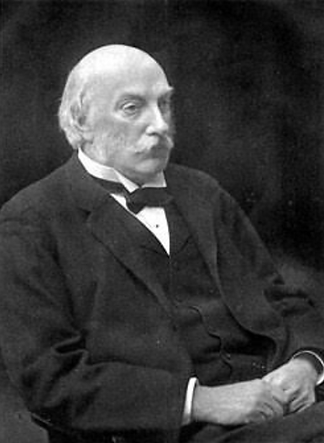
Photo credit: A portrait photo of John William Strutt, the third baron Rayleigh in 1904, taken by an unknown author.

The Georgian & Victorian era
In the 1720s, John Strutt purchased farmland and the Strutt Family moved to Terling, establishing the Strutts as the main landowners in the parish. Their family has lived here ever since.
In 1772 the brick towers of All Saints church were built, though the body of the church is medieval. Terling Place was also built between 1772 and 1777. Designed to be a country manor house for the Strutts, it was built near the site of the old Bishop’s Palace.
By the early 1800s, Terling became the only name used for the village. The Terling windmill was built in 1818 and later featured in the 1937 film Oh, Mr Porter!
In 1821, Lady Charlotte FitzGerald Strutt was created Baroness Rayleigh, formally linking the Strutt family with the Rayleigh name. From this point onward, Terling Place became the seat of the Barons Rayleigh. A conservatory was added to Terling Place in 1850 and a laboratory in the west wing was built in 1894.
In 1840, construction of the pub building in the village began. The pub was established properly in 1855 and included a brew house until 1923. Since then, it has operated as a pub, being extensively renovated over the years, most recently in 2016. The monkey motif on the Lord Rayleigh coat of arms is said to come from a 15th century Irish story involving ancestors of the Rayleigh family, where legend has it that a pet monkey heroically saved a trapped infant during a fire in the family castle.
The second Baron Rayleigh built the village school, enlarged the church and in 1868, after a terrible outbreak of typhoid fever, installed the village water supply system which is still used today.
In 1904, the third Baron Rayleigh, John William Strutt, won the Nobel Prize in physics for his discovery of argon as result of his work on the densities of gas, as well as his ground-breaking theoretical contributions to why the sky appears blue which is now known as the Rayleigh Scattering. This research was published in a multi-volume book titled the Scientific Papers.
Photo credit: A modern photo of Terling Place by John Fielding taken in the summer of 2017.
Recent history
The Terling and Fairstead Horticultural Show has been running since 1875, celebrating its centenary and a half in 2025.
The Terling pool was built for workers on Rayleigh’s farms in 1965 and the famous ‘Terling Tournament’ (previously known as the Terling Games) originated in the 1970s and is still held every two years in the heart of the village.
In 2017, Terling was crowned village of the year and, two years later, in 2019, Sam Briggs and her family founded the Owls Hill Tearoom on Owls Hill. The tearoom building had previously been used as a bathhouse for billeted soldiers in World War Two and as a storehouse for cheese. In 2026 the tearoom relocated to the old URC chapel opposite the All Saints Church.

Photo credit: A photo of the Rayleigh Arms in 2019, photographer unkown.